
Do you need to have a salvaged or rebuilt vehicle certified?
CVTO inspects salvaged and rebuilt vehicles to verify their compliance before they are returned to the road.
Before your appointment, make sure you have all the required documents.
Before your inspection
1- Prepare your application file
All documents must be complete, legible and correspond to the vehicle presented.
2- Prepare the vehicle
Repairs, alignment, body measurements and any other applicable work must be completed.
3- Call us to book an appointment
The vehicle and documentation will be verified as part of the certification process.
Required documents
Download and review the guides before beginning repairs. They include the documents and useful examples needed to prepare your file.
Salvaged vehicle — Complete list
| • DCVR form | Filled out clearly and neatly |
| • Insurer’s repair estimate | Must bear the notation “Certified true copy” along with the stamp and signature of the insurer’s representative (Quebec only) |
| • Purchase invoice of the damaged vehicle | A purchase agreement, registration certificate, or title of ownership may replace the invoice when the vehicle owner named on that document is the same as the one listed on the Application for Certification of a Reconstructed Vehicle form. |
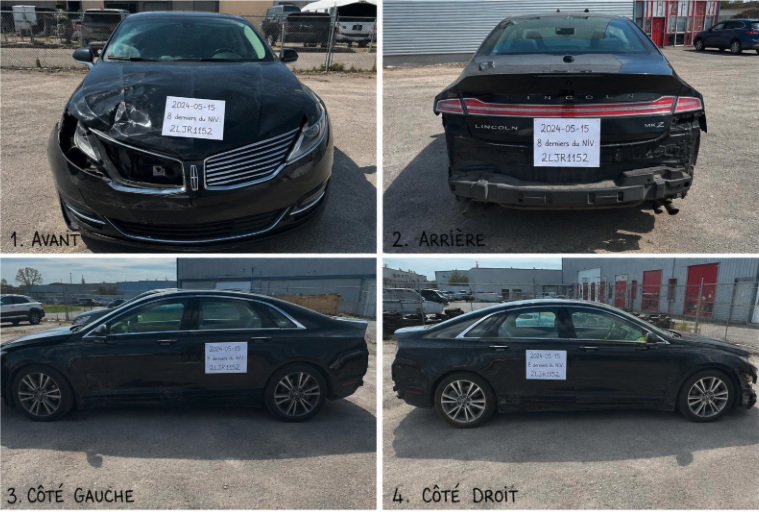
| • Annotated colour photos of four sides | The colour photos must: • clearly show the front, rear, and sides of the vehicle; • have been taken before the reconstruction; • include a sheet affixed to the vehicle displaying the handwritten date and the last eight characters of the vehicle identification number (VIN) of the vehicle to be repaired; • correspond to the repair estimate. |
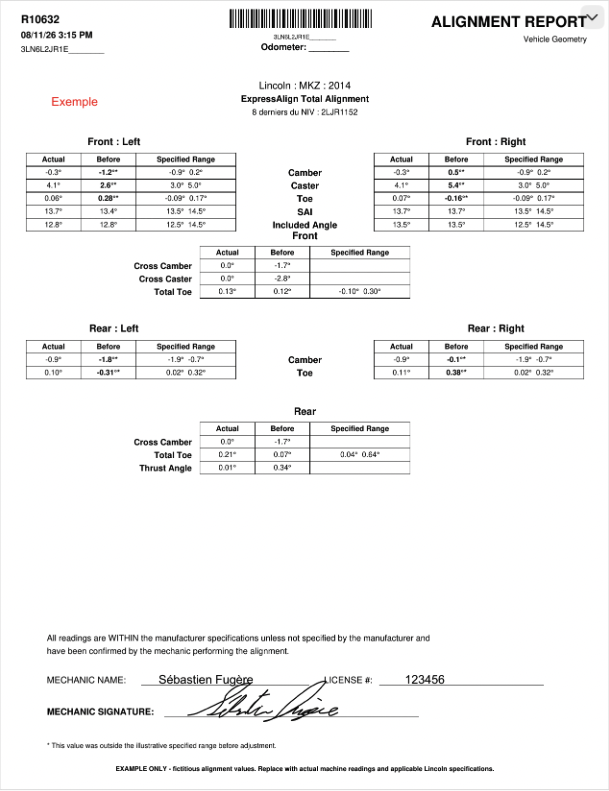
| • Alignment report | The printed alignment report must include: • the vehicle identification number (VIN); • the vehicle make, model, and year; • the alignment results; • the manufacturer’s specification; • the name and address of the facility that performed the alignment; • the date; • the signature of the mechanic who performed the alignment |
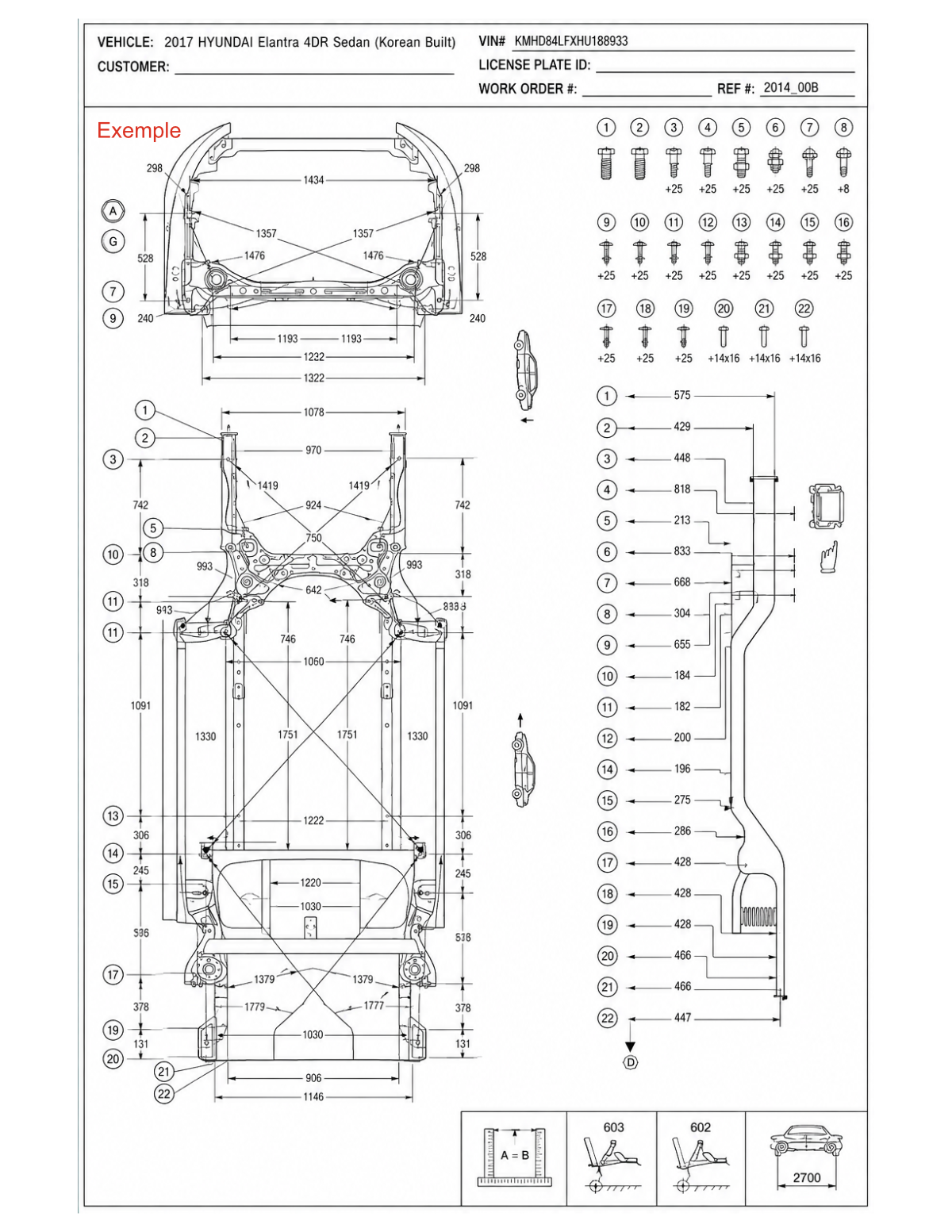
| • Manufacturer’s standard measurements | See attached example. This information can be obtained from a body shop or dent repair specialist. |
| • Invoices for major parts | Must include: • the supplier’s name • the description of the part; • the date of purchase; • the VIN of the original vehicle when the part is used. |
| • Photos on the straightening rack | As needed. Not required if the estimate indicates less than 4 hours on the chassis. If necessary, refer to the color photo |
| • Assembly joint photos and welding certificate | If applicable |
Rebuilt vehicle — Checklist
| • DCVR form | Filled out clearly and neatly |
| • Purchase invoice of the damaged vehicle | A purchase agreement, registration certificate, or title of ownership may replace the invoice when the vehicle owner named on that document is the same as the one listed on the Application for Certification of a Reconstructed Vehicle form. |
| • Alignment report | The printed alignment report must include: • the vehicle identification number (VIN); • the vehicle make, model, and year; • the alignment results; • the manufacturer’s specification; • the name and address of the facility that performed the alignment; • the date; • the signature of the mechanic who performed the alignment |
| • Manufacturer’s standard measurements | See attached example. This information can be obtained from a body shop or dent repair specialist. |
Examples of acceptable documents
These examples help clients clearly understand the type of documentation they need to prepare.
• Photos before the rebuild
• Wheel alignment report
• Manufacturer measurements